Relieving the stigma of interaction on public transport.

  • Chatty Commuters

    Relieving the stigma of interaction on public transport.

  • Campaigning at Victoria

    We go to one of London's busiest hotspots to test the levels of interaction between commuters.

  • Say Hi! Campaign

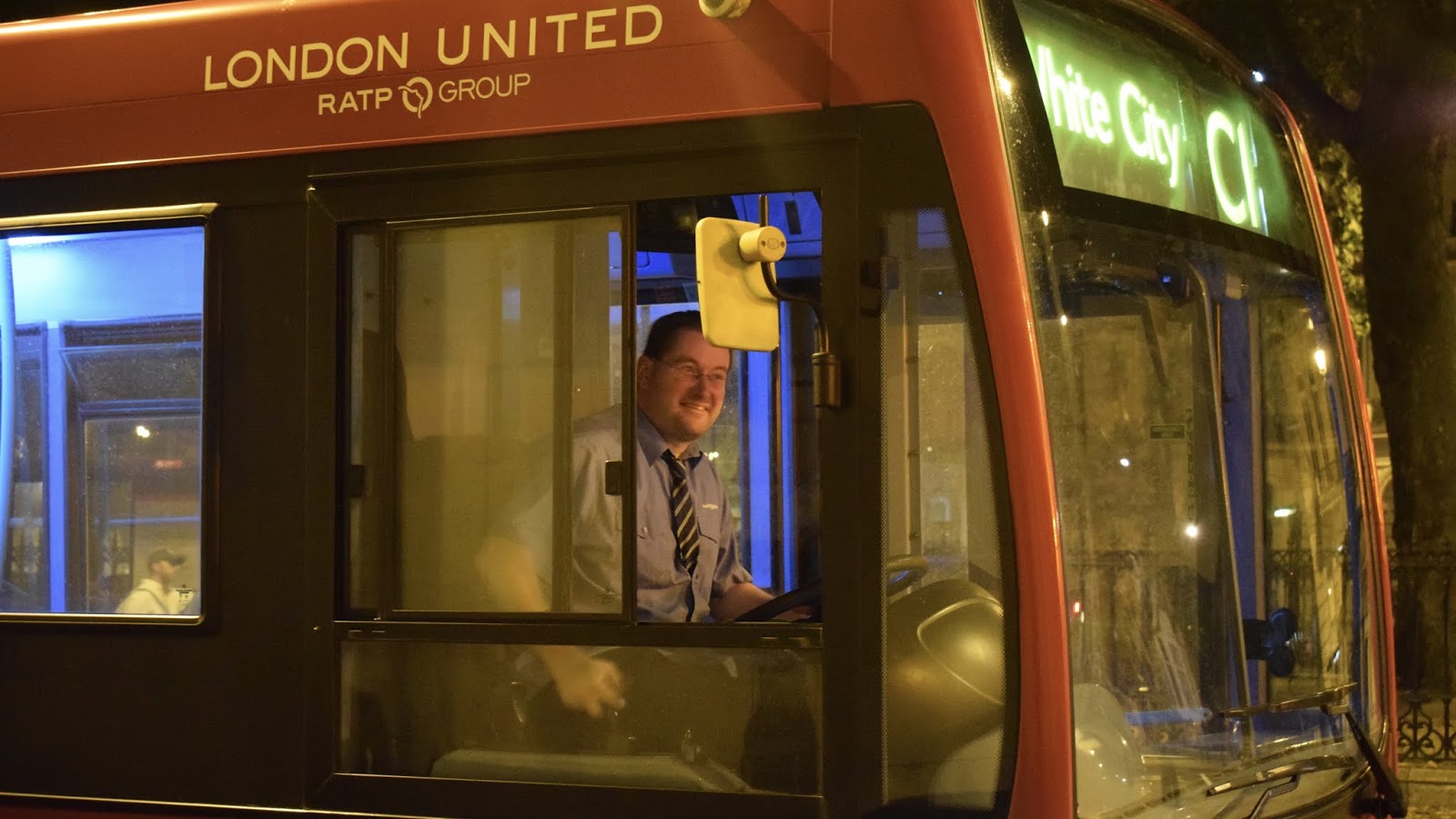
    Acknowledge your driver when you jump on or off a bus to relieve the stigma of interaction on public transport.

  • Taxis, Uber, ViaVan

    How has classical and new forms of cab service changed the potential for interaction between staff and customers in this mode of transport?

  • Challenge the Consultations

    Does TfL's consultation programme really give the public agency over their public transport services or are their consultations merely a facade of democracy?

Showing posts with label Hospitality in Transit. Show all posts

VIDEO: Hospitality in Transit

We offer an interactive hospitality service at St. John's Station to provide all commuters with that first-class privilege otherwise restricted to the few who can afford it. Our aim: to relieve the stigma of interaction on public transport. Politically loaded to challenge the spatial barriers to communication that have the implications of reaffirming class divisions on public transport.


Edited by Isaiah Egwuagu.
Narrated by Katy Davidson.
Share:

Free Tea at St. John's Station

I met up with Katy to complete one of our three interventions: Hospitality in Transit, a.k.a. Katy's Hospitality Service. It went much better than we expected!


One of the things that has set us back during this project is conforming to the procedural approach of asking for permissions. So we took it upon ourselves to set up a hospitality service at an isolated station with infrequent services where passengers could be either alone and/or waiting a while for their trains. Katy chose St. John's Station, which proved a brilliant choice as not only did commuters show appreciation for it - whether or not they had some tea or not - but the platform staff equally embraced it to the extent that they actually started offering commuters our service!

Katy and I used our skills from working in hospitality to entice commuters to our service. I also set up my camera on the bench pictured below to record some of the interaction for a short film documenting our intervention. I came back the week after the intervention to do some additional  scenic filming to complete the final edit.


Overall, Hospitality in Transit shows that a hospitality service at train stations can increase the scope for interaction towards relieving the unspoken awkwardness of interaction on public transport. From learning about the demands of being a platform guard to discovering a shared trait for on-the-cusp tardiness with another commuter, Hospitality in Transit turned one of the most isolated and quietest stations in London, to potentially the most interactive!

Perhaps with the cohesive capacity and extended planning, our catering intervention could be trialled at stations in north, south, east and west to see how the levels of interaction on public transport, or the opportunity for it, varies according to which side of London you are in. Us Chatty Commuters have learnt that Hospitality in Transit is best implemented at quiet stations, where the commute is less busy hence the potential for a more interactive commuting experience is achievable. All-in-all, satisfied with how this one went. Well done, Katy!
Share:

INTERVENTION: Hospitality in Transit!

We did our first intervention of the project! What began as the 'Bus Stop' intervention has evolved into what we're calling Hospitality in Transit.

What the aim was:
As explained in the previous post about the Bus Stop Intervention, what we wanted to do was produce an experience that would relieve the stigma around communication on transport and generate a positive atmosphere for everyone we came into contact with. We wanted to do this by providing a hospitality service that would have a positive impact on people's day and also act as a conversation starter between us and those around us. Considering our other interventions are bus focused, on this one we decided to shift to an alternative mode of transport so chose a train station. Additionally we wanted one that wasn't over crowded and one that didn't already have a shop so people would engage. After discussing the ones we knew of, we decided on St Johns station. This provided an alternative dimension as it is a very isolated station; only 2 platforms that's well away from the road.


What we actually did:
Wednesday, April 10th was the day we did the intervention. The logistics of providing a hospitality service took some consideration and after discussion, we decided to provide a hot drinks stand for anyone that was passing through. After gathering supplies in the morning, I met Isaiah and we made our way to the station where we set up. We put up some posters around the station to advertise what we were doing and used the posters I had made to draw attention as they had some shocking statistics of the realities of London Transport. Tea and coffee are things that a majority people enjoy and so I hoped it would be a product that most people would say yes to.


How it played out on the day:
Once we were all set up, we needed to begin engaging with those around us. Initially, it took a few minutes for us to figure out how to go about talking to people. Isaiah first went up and asking the conductor if he would like a hot drink, from there we asked passengers that were waiting for their train to arrive and then those getting off the train and leaving the station. As it got closer and closer to evening rush hour, the number of people that engaged with us picked up significantly and turned out to be hugely successful!

Of course the number of people taking tea was great, but it was the conversation that the small offering created that was the success of the day. Whether people accepted or declined to our offer there was always one question, "what's it for?". Our presence on this relatively small station was noticeable and therefore drew people in; they were curious of our intentions and wanted to find out more.
So we explained it to them. That were there with the intention of carrying out our aim - to relieve the stigma of interaction on public transport. We wanted to encourage communication of all types on the platform whether it was between the passengers with each other or the passengers and the station staff.  We had numerous interactions throughout the time we where there from 15 minute conversations where people wanted to know more about our University, degree or our modules to 1 minute interactions just to ask people how their day was going. But there were 2 that really stood out to me that I believe really enrapture the point of our intervention that day.

Firstly was with one of the platform conductors. This gentleman was named Nana and was one of two conductors running St Johns station. We started out by providing him with a beverage, asking about his day and explaining to him our intervention. He was discussing with us which stations he thought we'd have success at etc. However, after a while we really got an insight into what his job was like day to day. When we asked whether passengers interacted with him we got a varied response but a particularly interesting point was when Nana said that his interactions with passengers increased when it was dark; passengers tended to stand closer to him on whatever part of the platform he was on during the night. This was an aspect I hadn't thought of, probably something I maybe do subconsciously.  Here platform conductors are taking on another responsibility, whether they chose to or not, something we passengers take for granted. Although it was just a small thing Nana mentioned, I thought it was a really interesting point.
After some more small talk and Nana encouraging passengers to take a beverage on our behalf, he told us a story from just the week previously when he had been the only one working at the station. Nana spend most of his shift taking a women down from taking her own life by jumping in front of a train. He described how he noticed her down at the end of the platform, went down to confront her and talk to her in order to keep her engaged. Nana had to physically restrain the lady at one point, and managed to communicate with the train conductors office through a driver stationed at the platform to have the electricity to the whole station shut down. For one moment, the lady was able to escape Nana's watch and did manage to jump on the tracks from the platform but due to Nana's quick thinking and amazing conduct, she had no injuries and the police arrived soon after. We spoke to two conductors during our intervention and both had experienced, seen or knows of someone who has been involved in such a situation.  This is something that I don't think many people realise is a real part of the job of working on public transport; something which can have a serious impact on a persons life. Hospitality on transport allowed us to talk to Nana, hear his story and allow his to share it. This is some effort from us to allow staff to tell of what it's really like to work on transport and share the realities of the job to those who take the TFL staff for granted.


Other was a male and female, one of which was on crutches. This interactions was a lot shorter and they had just got off a train and where obviously intending to leave the station immediately. But with Nana's help, they agreed to take our offer of tea. When making the tea, I enquired to the lady how her journey and day had been, to which she replied 'not great'. However after just a few minutes of just talking, the five of us were laughing and smiling. Although it wasn't much, I truly hope and believe that small interaction helped to improve their day, putting a smile on their faces even if only for a few minutes.

All together, I think the intervention was real successful because it was simple. There was no pressure for the passengers or staff to engage but it was there if they wanted it, if it would contribute positively to their day. Our lengthy discussion hopefully improved his shift a bit, and showed to those around us that engaging in interaction with TFL staff is not a taboo but actually welcomed. Additionally, talking to passengers allowed us to open up the channels for communication between passengers and giving them tea would hopefully encourage them to pass the act of kindness forward so that they too contribute kindness to others they interacted with during the day. Thanks Isaiah for all your help in making the intervention a success and ensuring we had a great impact on the platform.




Share:

'Free Tea'

I met up with Hamza last week Tuesday to do one of the three interventions.
It didn't go as smoothly as we expected as we were in Tottenham Court Road.

Me and Hamza had met up with our phones on the verge of dying and we had set up just outside of the station just next to the furniture shop. In that the station was so fast and busy we didn't get a lot of people taking tea or anything we had to offer. We had analysed that there was a Pret that most people were getting food and drinks from as they were rushing to the underground. Although there was an all round respect for what we were doing as we got the casual 'thank you's' and 'no thank you' it was nevertheless a pleasure.
In that I had previous experience in hospitality we thought the intervention would go smoothly. In addition, the TFL staff were very kind however did not want tea as it was blazing hot.


Things to do next time:
Not to go to such a busy station
Not offering tea on a hot day
And carrying a camera
Thank you
-
Share:

Intervention

Our group have had many discussions in the workshop throwing out ideas at both ends of the spectrum of the conservative and the ridiculous! There have been periods of confusion, discouragement and skepticism as to which idea should be the main focus for our intervention and how we should move forward with our project. However, we are now at a stage where one intervention is inadequate to relieve the stigma of interaction on public transport. Therefore, we present a number of interventions that we plan to complete in the next two weeks.


Intervention 1
Say Hi! Campaign

The Say Hi! Campaign intends to relieve the stigma of interaction on public transport by sharing anecdotal experiences from using public transport on Instagram and Twitter. The campaign shall be completed by a short film demonstrating how simple it is to acknowledge a driver when boarding or alighting a bus. A YouTube channel shall be created shortly onto which we can upload our final edit.

The Say Hi! Campaign is very much a visual campaign which, fuelled by our rationale, seeks to address this stigma of interaction by restoring a sense of community between customers and transport workers that we feel is largely absent in London. This is despite our transport services being integral to everyday life in our city. After all, public transport is "the lifeblood that keeps London flowing".

The political implications of such a disconnect between public transport staff and members of the public is a growing sense of alienation. Public transport staff are undermined as low-paid workers which then constructs a stereotypical social structure whereby their job defines their low social status, despite the vitality of the jobs of public transport staff to our everyday life. Our campaign peers beneath the stereotypes and the stigma of interaction they consequently ooze.

We would like to think that our intervention could encourage a self-reflecting audience towards getting to know and empathise with the people providing their services - i.e. with each other. As our most recent Instagram post suggests, at the end of the day inside or outside the cab of a bus or train or taxi, "we are all the same" in the inclusive macro sense of the term: public transport staff are just one of us.


Intervention 2
Challenging the Consultation 

Transport for London use their consultation programme to invite the public to share their thoughts on proposed service changes. However, whether supported or not supported by the consultation vote results, changes, cutbacks and withdrawals have intervened with the way local services run irregardless of demand or service tradition as a symbolic part of one's community.

The percentage number of responses supporting these changes do not correspond with the fact that these changes went ahead, anyway. Challenge the Consultation.
Baker Street Corridor | TfL bus service proposal

Therefore, our second consultation is a politically loaded challenge of democracy: does the TfL consultation programme give a voice to the public in negotiating transport policy or does it merely give off the facade of democracy? The implementation of service changes against the response of the public shows a breakdown of communication between voters and politicians. These are two parties which, ironically, do not interact in the democracy, politically-speaking, in which we live.

To challenge the consultation's blatant disregard to the public response it invites, I plan to work with Bethel to create information sheets replicating that found on bus stops displaying route information to then stick over the route information of services recently changed - specifically those which have gone against public response - with our more journey-efficient alternatives.


Intervention 3
Katy's hospitality service

We are thinking to provide a hospitality service at either bus stops or train stations served by infrequent lines or routes to entertain passenger waiting time, or provide the hospitality service onboard public transport. This intervention is a subtle challenge to first-class service that is restricted to the few that can afford the privilege. Such stratifications only contribute to the stigma of interaction, financial capital again the defining theme behind it. 

If we are to provide our own hospitality service on public transport services or at public transport stations, everyone is able to enjoy the service without the class restrictions that separate one group of commuters from another. Katy and I can draw from our experiences working in the hospitality sector to inform a plan of action for this intervention.
Share:

Popular Posts

Featured Post

Intervention

Our group have had many discussions in the workshop throwing out ideas at both ends of the spectrum of the conservative and the ridiculous!...

Search This Blog

Translate

Labels