-
Chatty Commuters
Relieving the stigma of interaction on public transport.
-
-
Say Hi! Campaign
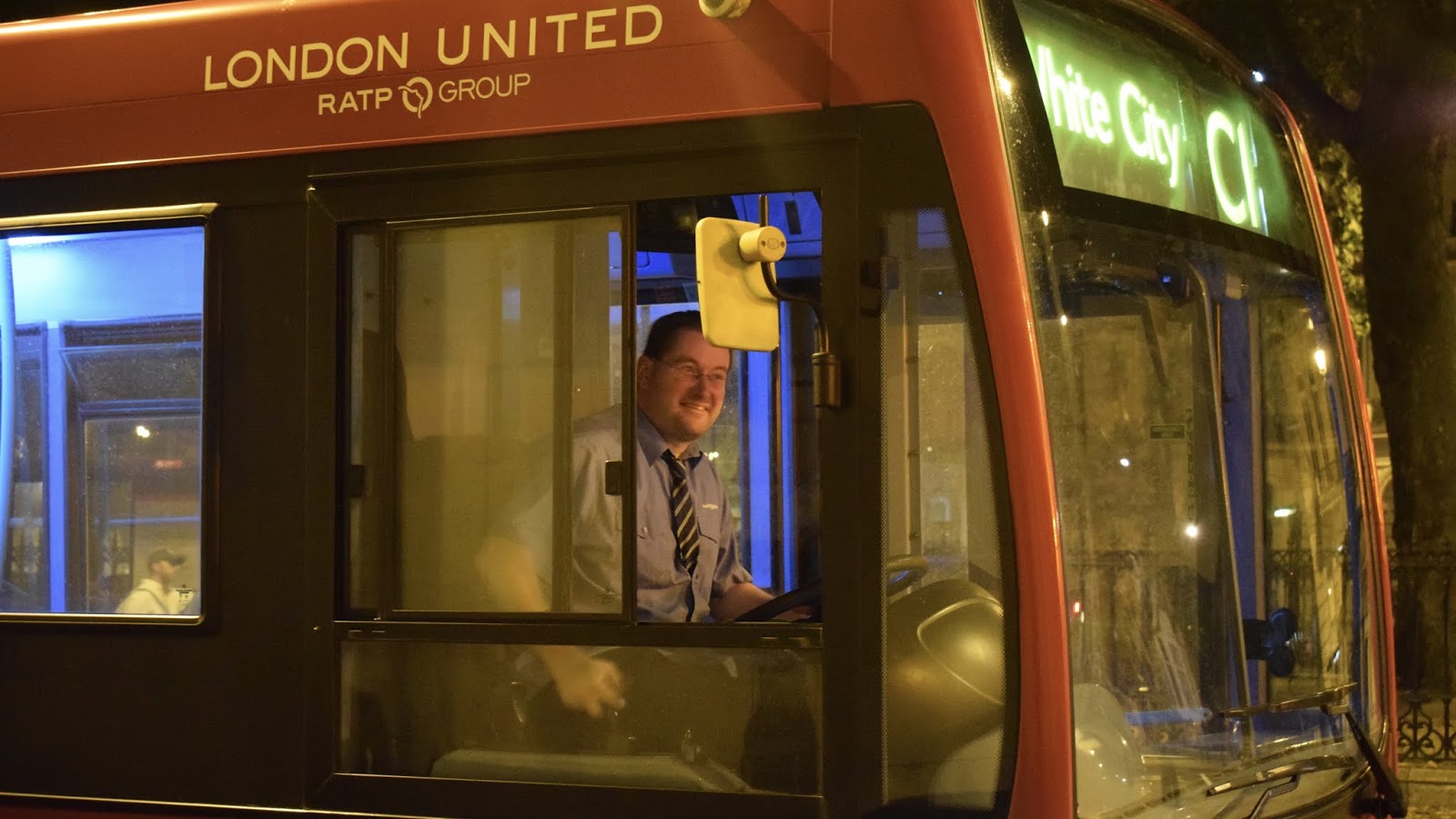
Acknowledge your driver when you jump on or off a bus to relieve the stigma of interaction on public transport.
-
Taxis, Uber, ViaVan
How has classical and new forms of cab service changed the potential for interaction between staff and customers in this mode of transport?
-
Challenge the Consultations
Does TfL's consultation programme really give the public agency over their public transport services or are their consultations merely a facade of democracy?
Tube Chat in Motion
I was a standee on the Bakerloo Line, relaxing against the handrail in today's humidity. Two passengers seated nearest to me had alighted, but I did not realise. Uncommon for the notoriously low interactional levels on the London Underground, a man - around senior age - gesticulated towards me to catch my attention and informed me that there were now two seats available to sit on. I told him I was getting off the next stop, but thanked him for his consideration before returning the interactional favour by catching his attention to wish him a good day before I myself alighted the next stop. I admittedly walked towards the doors with some haste to walk away from the attention I had created for ourselves to reinforce the fact that there is that awkwardness surrounding interaction on public transport, but more important to me was asserting a kind gesture back to the man.
As banal an anecdote it is, considerate and polite interaction like this is unfortunately not the norm on public transport, especially in London. Hence it is moments like these that I come to appreciate and, upon reflection, there is an additional appreciation for this module in that it embraces such banalities of everyday life that are otherwise left unspoken in common discourse and further left under-acknowledged by the generally theoretical sphere of academia.
Gender pay gap
Something is seen in all fields of work and multiple roles, the gender pay gap. In an economy and democracy as liberal as Britain, it's shocking to see this to be an issue across multiple sectors and careers.
I began researching after speaking to a familiar bus driver (Driver B as she does not want her identity to be disclosed) who has been driving the 1 bus from Canada Water to Tottenham Ct Rd for many years (since I was in secondary school!) and has seen many challenges like difficult school kids, rowdy drunks on the N1 and frankly difficult commuters.
As a young, black female bus driver she has faced animosity and stigma in the role previously dominated by men in regards to her: shift pattern, her routes, and even her driving!!
Driver B enjoys her job and loves seeing her locals that get on during the day and the sense of community it brings her to know she's supporting the movement as she was one of the first female drivers I can recall ever seeing growing up in SE16.
She briefly mentioned to me before I needed to get off the inequality in pay making me stumble across this article discussing Sadiq Khans efforts in reducing the pay gap and how far he has got. Have a read and a beautiful day!! Enjoy your journeys and notice something new, say hi to a driver; ask a question or few.
I began researching after speaking to a familiar bus driver (Driver B as she does not want her identity to be disclosed) who has been driving the 1 bus from Canada Water to Tottenham Ct Rd for many years (since I was in secondary school!) and has seen many challenges like difficult school kids, rowdy drunks on the N1 and frankly difficult commuters.
As a young, black female bus driver she has faced animosity and stigma in the role previously dominated by men in regards to her: shift pattern, her routes, and even her driving!!
Driver B enjoys her job and loves seeing her locals that get on during the day and the sense of community it brings her to know she's supporting the movement as she was one of the first female drivers I can recall ever seeing growing up in SE16.
She briefly mentioned to me before I needed to get off the inequality in pay making me stumble across this article discussing Sadiq Khans efforts in reducing the pay gap and how far he has got. Have a read and a beautiful day!! Enjoy your journeys and notice something new, say hi to a driver; ask a question or few.
Ultra Low Emissions
Its been a while since my last post, life has been super busy!
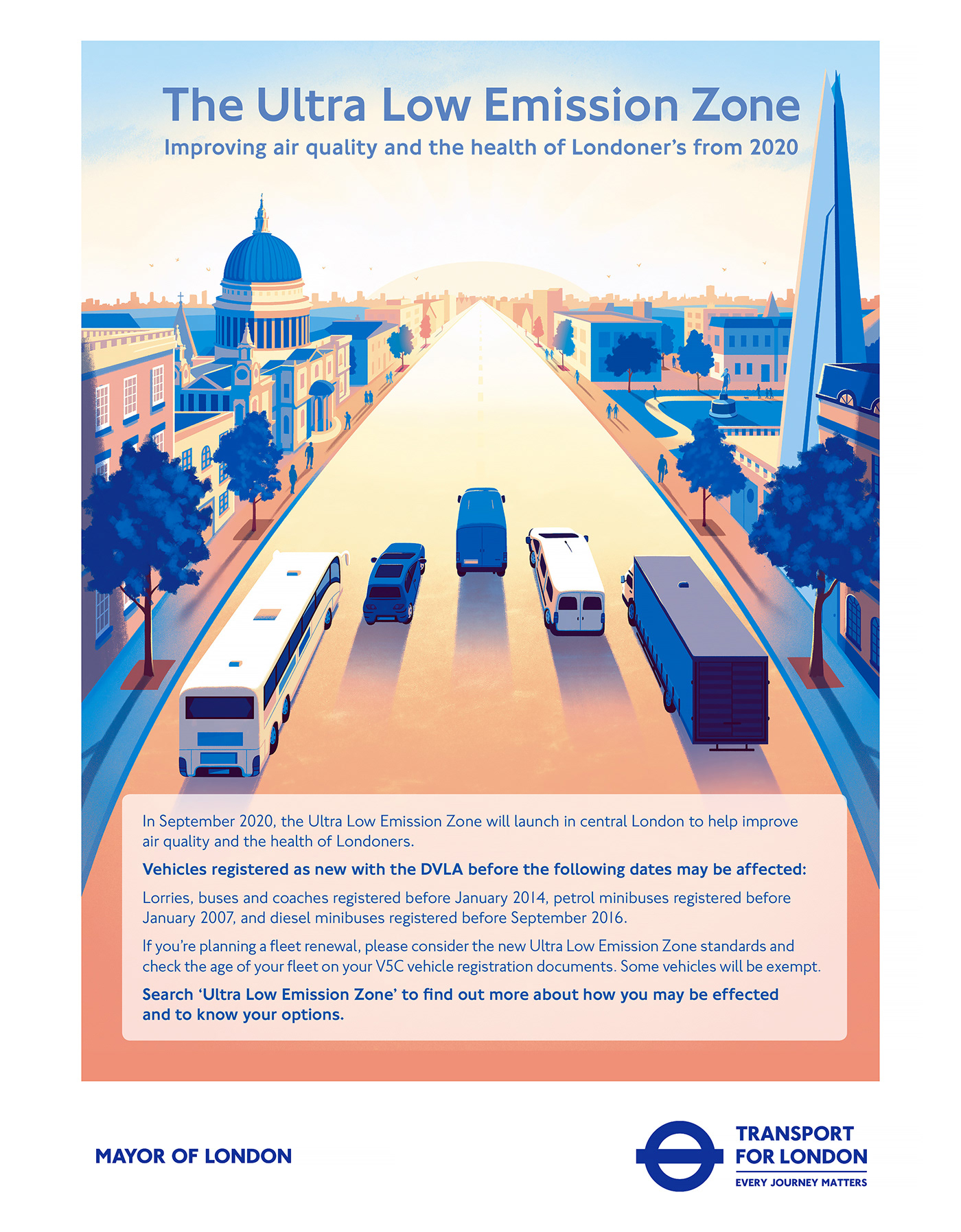
Something that has literally hit our streets recently: the Ultra Low EMISSIONS ZONES!
Implementing officially in September 2020 but making a start in particular areas, London taking back control of their air pollution and what it is emitting in its busy bustling streets. Here's some information below if you might be affected or want to find out more.
It's great to see big cities taking account of their carbon footprints and environmental change

Something that has literally hit our streets recently: the Ultra Low EMISSIONS ZONES!
Implementing officially in September 2020 but making a start in particular areas, London taking back control of their air pollution and what it is emitting in its busy bustling streets. Here's some information below if you might be affected or want to find out more.
It's great to see big cities taking account of their carbon footprints and environmental change

Blog layout and HTML coding
This post shows some of the internal work completed in order to give our blog an easy-to-use and (modestly) stylish interface. First, check out the default interface compared to the final edit. Some features such as the menus on the navigational panel have been removed as not all features were necessary to keep. Also notice that the template title "Central" has been changed to "Chatty Commuters", with our rationale printed below so you know what we're about. The social profiles feature such as our email (hyperlinked into the mail icon) and Instagram page is a nice addition.
![]() |
| Default blogging interface. |
![]() |
| Chatty Commuters edit. |
In order to make these changes, I had to interpret the html coding for this blog. Once I understood them, I could make the necessary changes to complete a distinguished look for our interface. Using the Blogger descending navigation panel on the left side of the screen, select Theme and then Edit HTML.
![]() |
| Blogger descending navigational panel to the left on the left side of the screen. Select Theme and then Edit HTML, to the right of Customise which is in orange. |
For ease of navigation through the html codes, I pressed Cmd+F and typed in 'Business', which is the second option on the interface navigation panel. I then changed that to 'Intervention' and made use of the sub-menus to show audiences that we have three interventions planned.
![]() |
| Default html. |
I have hinted at the stigma of interaction on public transport in an article for London Connected about my local route 18/N18. I went out to review its move to a new operator with new buses, got to Sudbury and boarded an N18 back home. A simple gesture to the driver turned into a night full of politically and sociologically loaded chat about life as a bus driver and the experiences one gains from it. For example, we reminisced of a time where passengers could talk to their drivers (or conductors) and how a bus service could be central to a strong sense of community, compared to now where the potential for interaction on public transport feels awkward and limited, hence our rationale: to relieve the stigma of interaction on public transport.
Anyway, I have added 'London Connected' as the 'Featured' link on the navigation panel from which referential resources such as previous interactional encounters with bus drivers can be drawn. London Connected have similarly added Chatty Commuters to its Links as a method of promotion.
![]() |
| Chatty Commuters edited html. |
The slideshows are a key part to this blog, as they allow us to summarise the main themes influencing our intervention. Therefore, I edited the default slider html codes accordingly.
![]() |
| Default sliders. |
![]() |
| Edited sliders. |
I think it is important to commit to the aesthetics of the blog, so that it is accessible and users can navigate their way through efficiently. I particularly like the fact that the blog layout is simple but effective as it is sort of symbolic of our intervention: something as simple as saying "hi" to your bus driver can be as effective as making them feel acknowledged and appreciated by their passengers.
Intervention 1: Bus Garage
So after Isaiah's post you guys know the basic idea of the intervention now that we've heard back from the bus garage.
When us two met on Monday we just brain stormed a few ideas of what to talk about when we go ahead with these interviews. These are the questions we'll put to the people we talk to:
- How often do people talk to you?
- Do people make the effort to smile, be polite or ask about your day?
- Do you think people see you as an extension of the service rather than a real person? Do you think the glass protection contributes to this dehumanizing
- Do you think people recognise the difficulties of working on public transport? Health problems, mental health issues or abuse.
- Do you see other passengers interact with each other?
- Do you think there is a stigma around communication on public transport? Between passengers, staff or management.
- Whats the worst things that you've seen or had to experience on your job?
- How would you evaluate the interaction and communication between service controllers and yourselves.
Add any other questions you think we should include!
Katy
Intervention
IsaiahApril 07, 2019Challenge the Consultation, Hospitality in Transit, Say Hi! Campaign
No comments
Our group have had many discussions in the workshop throwing out ideas at both ends of the spectrum of the conservative and the ridiculous! There have been periods of confusion, discouragement and skepticism as to which idea should be the main focus for our intervention and how we should move forward with our project. However, we are now at a stage where one intervention is inadequate to relieve the stigma of interaction on public transport. Therefore, we present a number of interventions that we plan to complete in the next two weeks.
Intervention 1
Say Hi! Campaign
The Say Hi! Campaign intends to relieve the stigma of interaction on public transport by sharing anecdotal experiences from using public transport on Instagram and Twitter. The campaign shall be completed by a short film demonstrating how simple it is to acknowledge a driver when boarding or alighting a bus. A YouTube channel shall be created shortly onto which we can upload our final edit.
The Say Hi! Campaign is very much a visual campaign which, fuelled by our rationale, seeks to address this stigma of interaction by restoring a sense of community between customers and transport workers that we feel is largely absent in London. This is despite our transport services being integral to everyday life in our city. After all, public transport is "the lifeblood that keeps London flowing".
The political implications of such a disconnect between public transport staff and members of the public is a growing sense of alienation. Public transport staff are undermined as low-paid workers which then constructs a stereotypical social structure whereby their job defines their low social status, despite the vitality of the jobs of public transport staff to our everyday life. Our campaign peers beneath the stereotypes and the stigma of interaction they consequently ooze.
We would like to think that our intervention could encourage a self-reflecting audience towards getting to know and empathise with the people providing their services - i.e. with each other. As our most recent Instagram post suggests, at the end of the day inside or outside the cab of a bus or train or taxi, "we are all the same" in the inclusive macro sense of the term: public transport staff are just one of us.
Intervention 2
Challenging the Consultation
Transport for London use their consultation programme to invite the public to share their thoughts on proposed service changes. However, whether supported or not supported by the consultation vote results, changes, cutbacks and withdrawals have intervened with the way local services run irregardless of demand or service tradition as a symbolic part of one's community.
![]() |
| The percentage number of responses supporting these changes do not correspond with the fact that these changes went ahead, anyway. Challenge the Consultation. Baker Street Corridor | TfL bus service proposal |
Therefore, our second consultation is a politically loaded challenge of democracy: does the TfL consultation programme give a voice to the public in negotiating transport policy or does it merely give off the facade of democracy? The implementation of service changes against the response of the public shows a breakdown of communication between voters and politicians. These are two parties which, ironically, do not interact in the democracy, politically-speaking, in which we live.
To challenge the consultation's blatant disregard to the public response it invites, I plan to work with Bethel to create information sheets replicating that found on bus stops displaying route information to then stick over the route information of services recently changed - specifically those which have gone against public response - with our more journey-efficient alternatives.
Intervention 3
Katy's hospitality service
We are thinking to provide a hospitality service at either bus stops or train stations served by infrequent lines or routes to entertain passenger waiting time, or provide the hospitality service onboard public transport. This intervention is a subtle challenge to first-class service that is restricted to the few that can afford the privilege. Such stratifications only contribute to the stigma of interaction, financial capital again the defining theme behind it.
If we are to provide our own hospitality service on public transport services or at public transport stations, everyone is able to enjoy the service without the class restrictions that separate one group of commuters from another. Katy and I can draw from our experiences working in the hospitality sector to inform a plan of action for this intervention.
Bus art
I thought you guys might be interested in this artist’s intervention on a bus in Sao Paolo (a city renowned for segregation, violence and aggressive zoning) . Teresa Siewerdt’s intervention, Jardim de Passagem involved 26 performers who waited at different bus stops along a specific route, all carrying large plants of different varieties, and waiting for a specific pre-indicated bus. By the end of the journey, the bus is full of people with large plants which lifts the mood of everyone on the bus. At the end of the route, the plants are distributed to passengers.


